Toilets
Rimmed vs rimless toilets: what actually matters for cleaning and hygiene
Rimless toilets can be easier to clean, but only if the flush design is good. Here's what to look for.
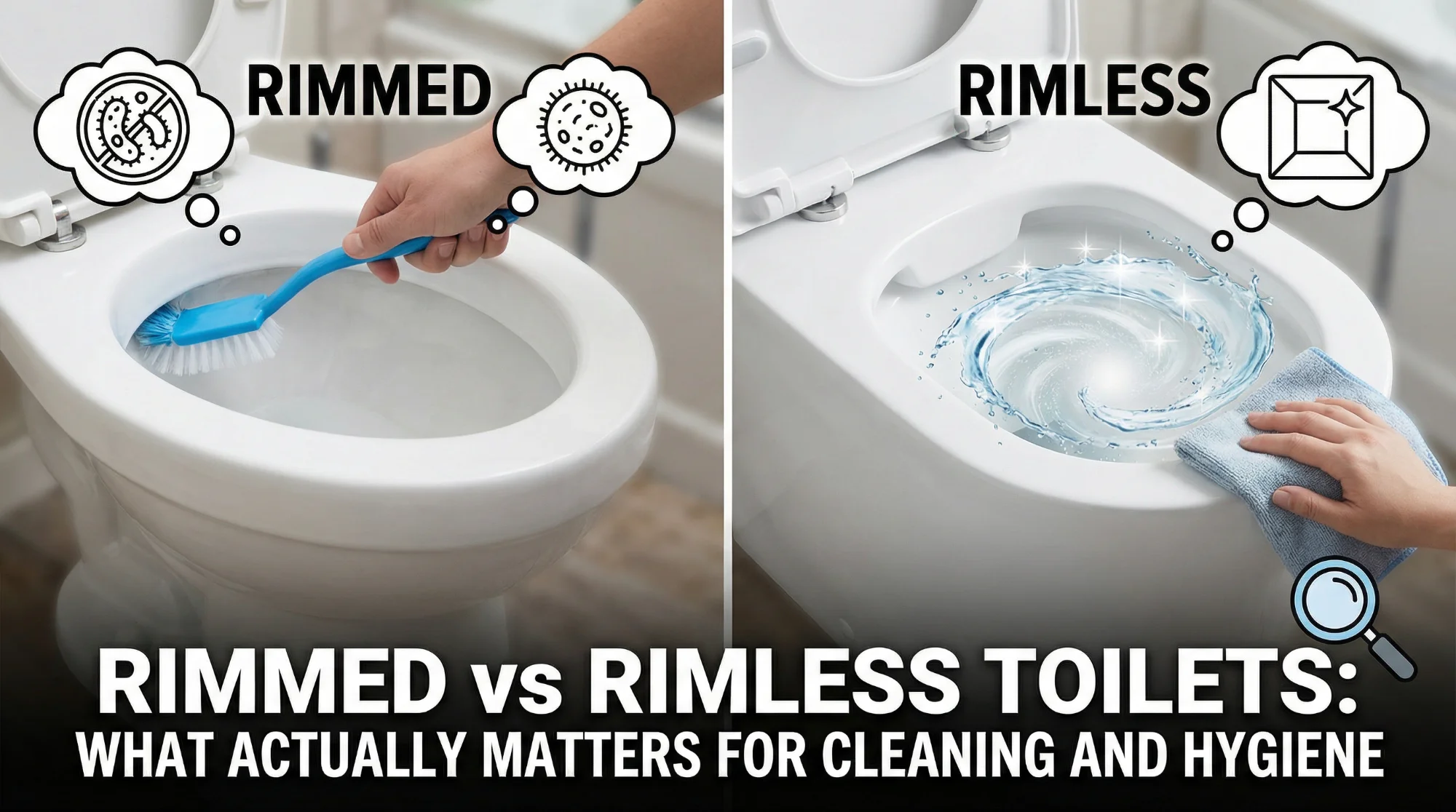
Rimless Toilets Can Be Easier to Clean — But Only If the Flush Design Is Good. Here’s What to Look For.
Rimless toilets are often promoted as a hygienic upgrade, and for good reason. By removing the traditional rim where dirt and bacteria collect, they reduce hidden grime and make cleaning quicker. But not every rimless toilet performs well. The real difference lies in the flush design.
Before choosing one, here’s what actually matters.
1. How Rimless Toilets Work
Traditional toilets have a concealed rim that distributes water around the bowl. This hidden channel can trap dirt, making thorough cleaning difficult.
Rimless toilets eliminate that channel and instead use a directed flush that spreads water around the bowl through an open design.
Result:
Fewer hidden areas for bacteria
Easier wipe-down cleaning
Better hygiene visibility
But this advantage only works when water distribution is engineered properly.
2. Flush Coverage Is the Most Important Factor
A good rimless toilet should send water evenly across the entire bowl surface. Poor designs create gaps where waste residue remains.
Check for:
Full bowl wash coverage
Strong side water flow to prevent streaks
Splash-controlled water direction
If water hits only one side, cleaning becomes more frequent — defeating the purpose of rimless design.
3. Splash Control & Bowl Shape
Some low-quality rimless toilets suffer from splashing because water exits without controlled channels.
A well-designed model will include:
Curved bowl geometry to guide water
Precision flush outlets that direct flow downward
Smooth inner contours that reduce turbulence
Tip: If possible, watch a demo flush before buying.
4. Flush Technology Matters More Than “Rimless” Label
Not all rimless toilets use the same flushing system. Performance depends on the mechanism behind it.
Reliable options include:
Tornado / vortex flush systems
Dual-directional flush distribution
Pressure-assisted flushing for stronger wash
A rimless toilet with weak flushing power can lead to double flushing and water waste.
5. Material & Glazing Affect Cleaning Ease
Even with a rimless design, surface quality matters. A smooth, high-gloss glaze prevents stains and buildup.
Look for:
Anti-bacterial glaze
Non-porous ceramic finish
Easy-clean coating technology
Rough surfaces trap residue regardless of rim design.
6. Installation & Maintenance Considerations
Before choosing a rimless model, confirm:
Water pressure compatibility
Proper alignment of flush tank and bowl
Availability of replacement parts
A poorly installed rimless toilet can reduce flush efficiency and create splashing issues.
7. Common Mistakes Buyers Make
Assuming all rimless toilets clean equally well
Ignoring flush coverage during selection
Choosing design over performance
Overlooking glaze quality
Buying ultra-budget models with weak flushing systems
Final Thought
Rimless toilets can genuinely improve hygiene and simplify maintenance, but only when the flush system is engineered effectively. Instead of focusing solely on the rimless label, evaluate water distribution, splash control, glazing quality, and flush strength. When these factors align, a rimless toilet becomes a practical upgrade rather than just a design trend.
Keep reading
More from the blog

The Future of Toilets: How Smart Technology Is Changing Bathrooms
Smart toilets are transforming modern bathrooms with automation, hygiene features, and advanced technology. Explore how toilet design is evolving and what the future holds.
10 Questions to Ask Before Buying Bathroom Fixtures (Most People Miss These)
Before buying bathroom fixtures, ask these 10 important questions to avoid common mistakes related to pressure, materials, installation, and long-term performance.
Shattaf Pressure Problems? Here’s Why It Happens and How to Fix It
Facing weak or inconsistent shattaf pressure? Learn the real reasons behind spray issues and how to fix them properly without replacing the whole set.