Basins & Vanities
Choosing a vanity and basin: size, storage, and daily practicality
Pick a vanity for how you actually use the bathroom: storage, cleaning access, and splash control matter more than looks.
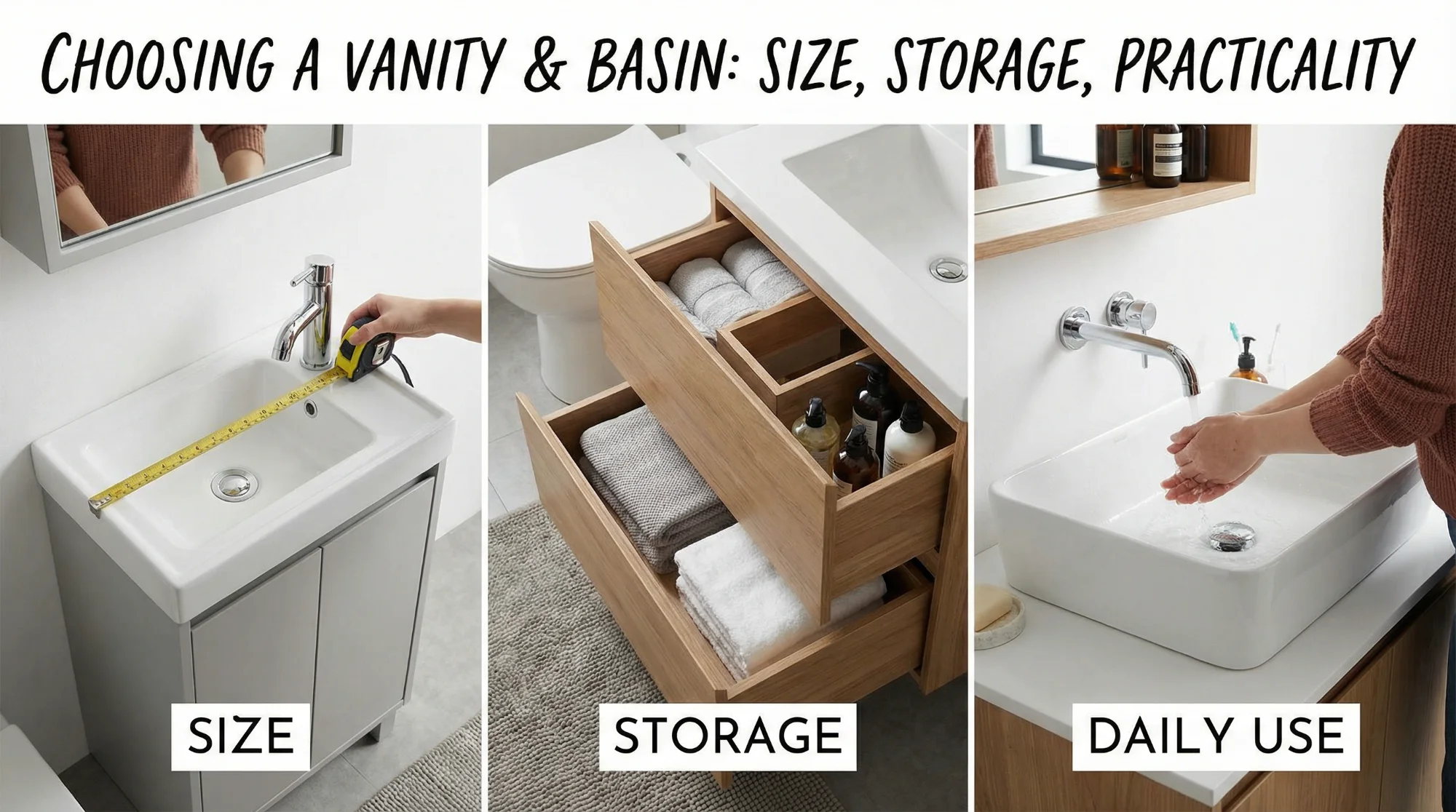
Pick a Vanity for How You Actually Use the Bathroom — Storage, Cleaning Access & Splash Control Matter More Than Looks
Bathroom vanities often get chosen for design first, but daily use quickly exposes practical flaws. Lack of storage, difficult cleaning access, and water splashes can turn even the most stylish vanity into a frustrating fixture. A good vanity should support routine habits, not just match the tiles.
Here’s what to focus on before making a decision.
1. Storage That Matches Real Usage
A vanity should organize daily essentials without overcrowding the countertop. Many people underestimate how much storage they actually need.
Consider your routine:
Skincare and grooming products
Cleaning supplies
Towels and spare toiletries
Electrical accessories like hair dryers or trimmers
Smart storage features:
Deep drawers instead of basic cabinets
Dividers for better organization
Hidden compartments for clutter control
Mirror cabinets for additional vertical storage
Choosing the right storage layout prevents messy counters.
2. Cleaning Access Affects Long-Term Maintenance
Vanities with poor floor clearance or complex edges collect dust and moisture, making cleaning difficult.
Easy-clean vanity options:
Wall-hung vanities with visible floor space
Simple base designs without excessive detailing
Smooth surfaces with minimal grooves
Open-bottom designs for quick mopping
A vanity that simplifies cleaning saves effort over time.
3. Splash Control Is Often Ignored
Water splashing from basin use can damage cabinetry, stain surfaces, and create constant wipe-down work.
What helps reduce splashing:
Proper faucet height and spout reach
Basin depth suited to daily use
Water hitting near the drain instead of basin edges
Moisture-resistant materials for cabinet surfaces
Splash control isn’t just about comfort — it protects the vanity’s lifespan.
4. Size & Proportion Should Fit the Bathroom
Oversized vanities restrict movement in compact bathrooms, while undersized units reduce functionality.
Balance is key:
Leave enough walking space around the vanity
Match basin width with cabinet depth
Ensure drawer opening clearance
Consider corner vanities for tight layouts
Well-proportioned vanities improve both usability and spatial flow.
5. Material Choice Impacts Durability
Bathrooms experience moisture, temperature changes, and frequent cleaning. Vanity materials should handle these conditions.
Reliable options include:
Moisture-resistant MDF or plywood with proper sealing
PVC cabinets for high-moisture environments
Solid surface countertops for durability
Ceramic or stone basins for stain resistance
Low-quality materials may look good initially but deteriorate quickly.
6. Budget Priorities That Make Sense
💰 Spend On:
Durable cabinet construction
Smooth drawer hardware and soft-close fittings
Moisture-resistant finishes
Quality basin and countertop
💸 Save On:
Overly decorative cabinetry details
Trend-driven shapes that affect functionality
Expensive countertop materials with high maintenance
Custom builds when modular options fit your needs
7. Common Vanity Selection Mistakes
Choosing style over storage capacity
Ignoring splash behavior during basin use
Installing floor-mounted cabinets that trap moisture
Poor measurement leading to cramped layouts
Selecting materials unsuitable for humid environments
Final Thought
A vanity plays a central role in daily bathroom use, so practicality should guide the decision. Storage efficiency, cleaning accessibility, splash control, and material durability determine whether a vanity remains convenient over time. When these factors are prioritized, even a simple design can deliver comfort, organization, and long-term reliability.
Keep reading
More from the blog

The Future of Toilets: How Smart Technology Is Changing Bathrooms
Smart toilets are transforming modern bathrooms with automation, hygiene features, and advanced technology. Explore how toilet design is evolving and what the future holds.
10 Questions to Ask Before Buying Bathroom Fixtures (Most People Miss These)
Before buying bathroom fixtures, ask these 10 important questions to avoid common mistakes related to pressure, materials, installation, and long-term performance.
Shattaf Pressure Problems? Here’s Why It Happens and How to Fix It
Facing weak or inconsistent shattaf pressure? Learn the real reasons behind spray issues and how to fix them properly without replacing the whole set.